The honest orientation
What this market
actually is.
Psar Tuol Tom Poung has spent forty years accumulating identities. Soviet supply depot. Zippo lighter bazaar. Factory surplus destination. Specialty coffee neighbourhood anchor. Each layer is still there if you know where to look — and each one tells you something about what Phnom Penh was doing at the time.
The roof is still corrugated metal that traps the heat — not because nobody has fixed it, but because the market grew organically in the early 1980s when people were trickling back into a city that had been emptied. There was no budget for architecture. There was barely a city. That heat you feel at noon is historical.
The correct name is Psar Tuol Tom Poung. Locals call the surrounding area TTP Town. That's what this guide uses throughout.
Factory Surplus
& Fabrics

The surplus scene has matured — which means it has also diluted. Cheap fast-fashion knockoffs now outnumber the genuine factory overruns. But Gap, Zara, Levi's, and Lululemon overstock from local export factories is still here. You just have to hunt by touch rather than signs.
Head to the south and west aisles. The hallmark of genuine surplus is the tag: physically cut or blacked out with a marker. That's the factory redirecting overruns away from the brand's distribution chain. Unglamorous signage, but the most honest signal in the building.
The central-east section is the real find — linen, silk, heavy-duty denim, priced by the meter. Bring a reference garment if you want something made. Seamstresses nearby can clone it in 24–48 hours at a price that won't make you wince.
Check the seams. Genuine factory surplus has high-quality overlocking — consistent, tight, no loose threads. Market-made fakes have inconsistent stitching and sizing that doesn't match the label. A ten-second check that will save you every time.
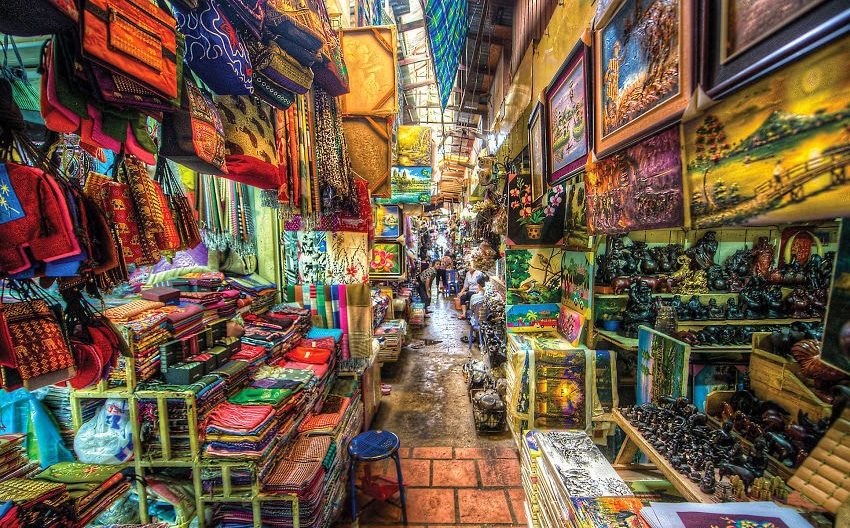
Jewellery & Silver
Inside the labyrinth, past the fabric section, there's a high-density zone most guides don't mention: the jewellery and precious metals wing. This is where Khmer silverwork is traded — not for tourists, but for locals buying traditional gifts, wedding pieces, and everyday adornments.
Khmer silverwork — bracelets, rings, ceremonial pieces — at prices that reflect local demand rather than tourist margin. The craftsmanship is genuine and traceable. This is where Phnom Penh families come for traditional silver gifts. Gold pieces are also available, though gold pricing is internationally indexed so bargaining has limits.
Unless you know Khmer silverwork, it's hard to assess quality on sight. Worth it if you've done some homework, or if you're buying something simple and handmade. For significant purchases, bring someone who knows what they're looking at.
Morning Food Stalls
The south and west perimeter before 9am is the soul of TTP Town before it performs for anyone. Monks collecting alms, motodops grabbing a quick bowl, vendors setting up. $1.50 buys you breakfast that will make the café down the road feel like theatre.
Find the Bai Sach Chrouk vendors where charcoal smoke hits the street — pork and rice, served with clear broth and pickled daikon. Also: Nom Banh Chok — Khmer noodles in a light fish-based green curry broth, served from large ceramic pots. Both cost almost nothing and are among the better breakfasts in Southeast Asia.
Skip the air-conditioned cafés for this hour. Find the stalls with old-school tin drip filters and condensed milk. Thick, dark, and more caffeinated than the cup suggests. $0.50. It will carry you through the entire market.
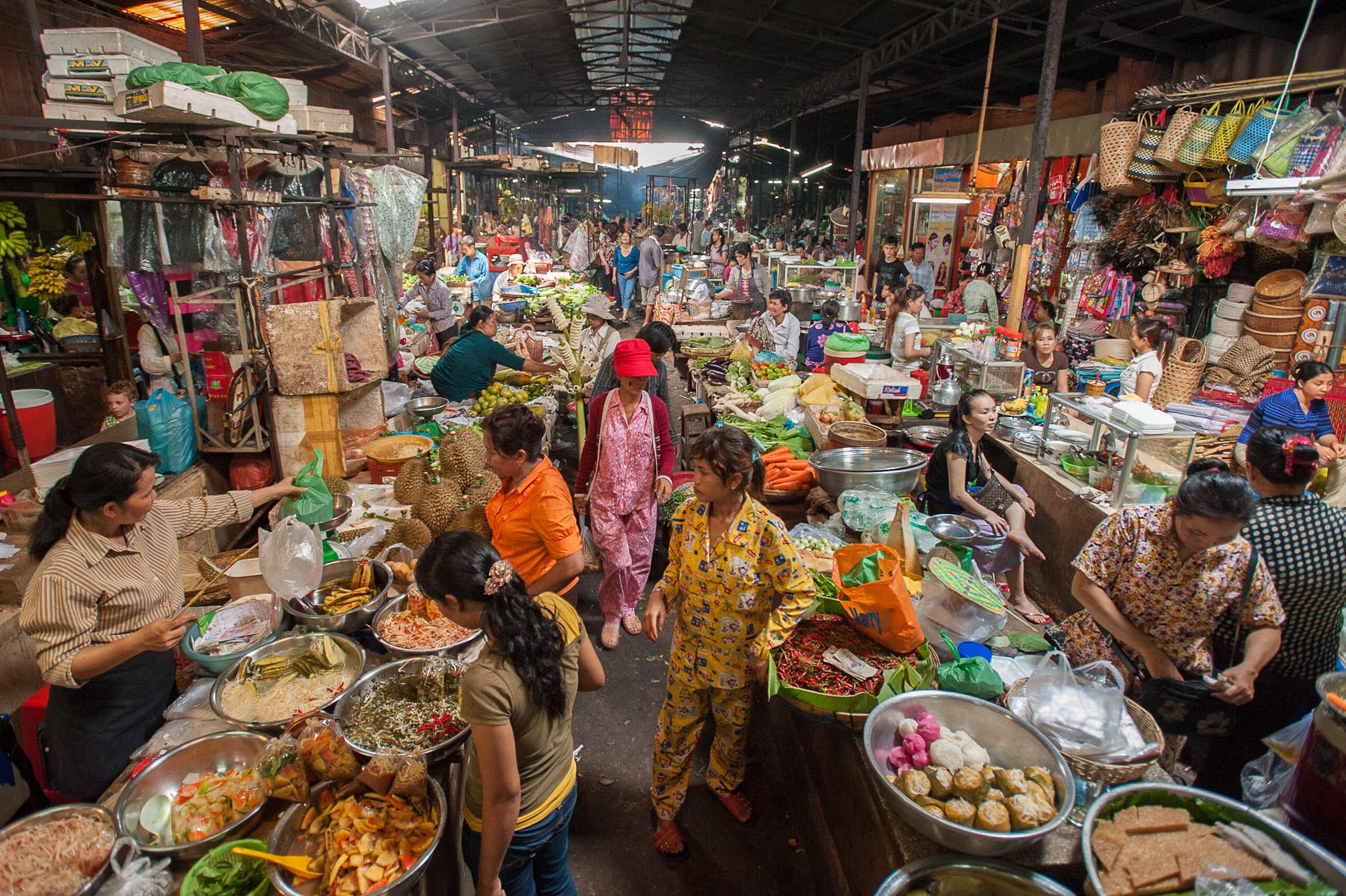
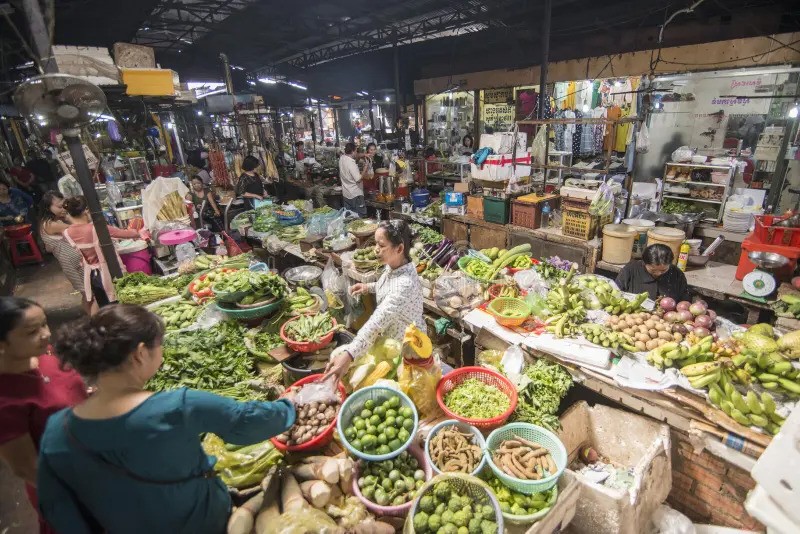
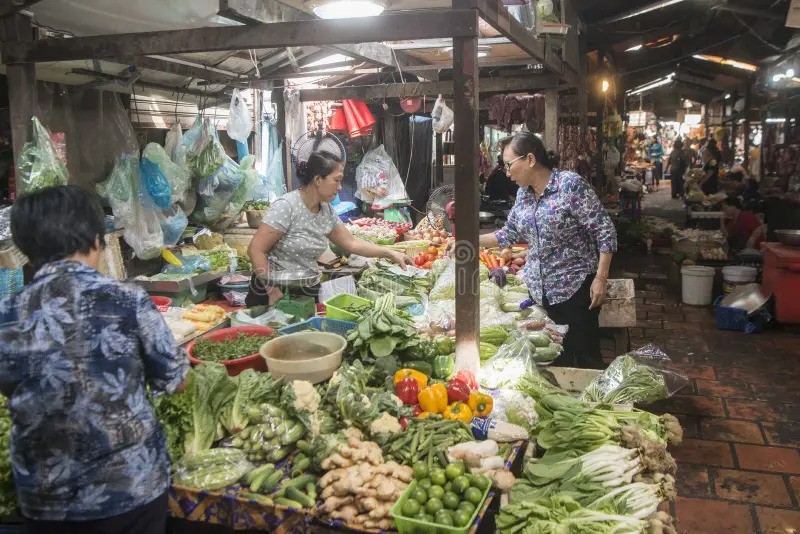
Before 9am, the outer perimeter also has the working wet market: live fish, fresh butchery, mountains of local produce. This is where the neighbourhood actually feeds itself — not for tourists, not performed, just the city at its most functional. Watch your step: the floors are wet, the narrow passages between stalls are genuinely slippery, and the sensory experience is full-contact. If you're not ready for the smell of a working fish market at 7am, enter from the south food stalls side instead.
The ice is safe.
Cambodia's 2025 food safety legislation mandated industrially produced tube ice across all market vendors. The iced coffee you're about to order — the one with the condensed milk and the tin filter — uses ice that is now produced to a certified standard. First-timers: drink it. It's fine. This particular fear factor has been resolved.
Repairs & Alterations
TTP Town is arguably the best place in Phnom Penh for invisible fixes. These stalls are tucked into the narrow interior corridors and surrounding sidewalks — not designed for browsing, designed for people who know what they need.
Buy fabric in the central-east section, walk to the nearby seamstresses. Bring an existing garment as a reference. 24–48 hour turnaround for something straightforward. Don't rush it — the $8 alteration done in three hours is not the same garment as the $8 alteration done in 24.
Located mostly on the exterior corners. They don't just re-glue — they have heavy-duty stitching machines that can revive boots most repair shops would decline. A few dollars. Worth it every time.
The northeast corner is the surgical ward. Screen swaps, charging port replacements, battery jobs — often while you wait, at a fraction of any official service centre cost. They've seen everything. They will not be impressed by your problem.
The Hardware Hub
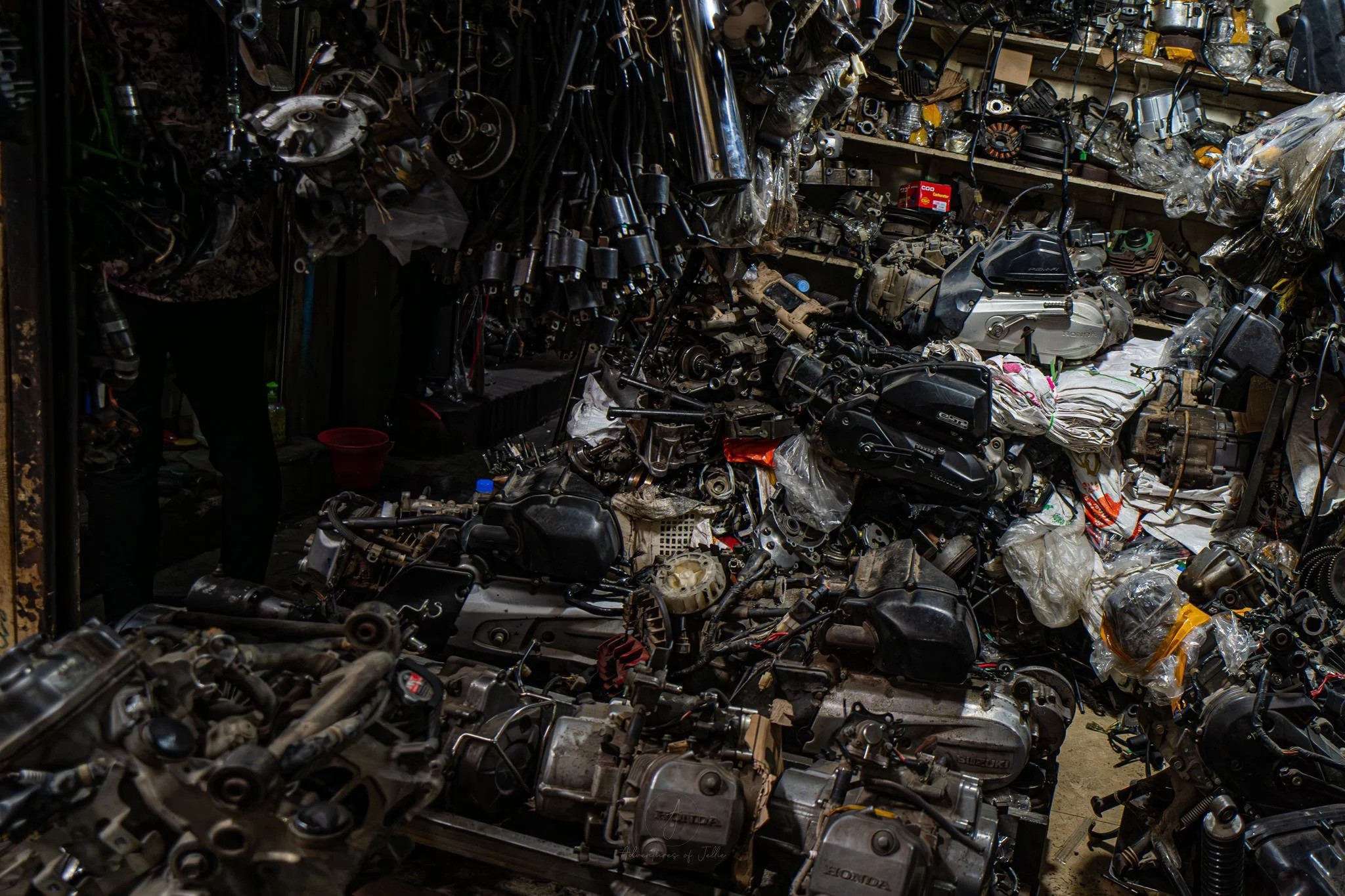
The northeast quadrant of the market is the reason it became the "Russian Market" in the first place. Dense aisles of motorbike parts, gears, sprockets, spark plugs, chains, and mechanical components — a wall-to-wall steampunk dream that most guides walk past. You don't need to buy anything here. Walking through it is the point.
When Soviet advisors flooded Phnom Penh in the 1980s bringing heavy machinery and Eastern Bloc equipment, TTP Town became the city's primary parts depot. That identity never left. The mechanics who keep Phnom Penh's motorbikes running come here. The contrast between this section and the boutique cafés two streets away is the whole story of the neighbourhood in miniature.
Walk through slowly. The scale of the inventory — floor to ceiling, every surface covered — is genuinely impressive. Vendors here are not set up for browsing tourists and won't perform for you. That's exactly what makes it worth the detour. It fits directly into the "unperformed TTP Town" thesis of this guide.
What to Skip
The honest bottom of the guide. No judgment — just calibration. Some of this is harmless, some of it is a genuine waste of your time and money.
The "Antiques"
99% of the ancient Buddhas, weathered coins, and Angkorian-style carvings are chemically aged reproductions. They look good as décor. They are not investments, and the sellers know the difference between the two even when the framing suggests otherwise. Buy one if you like how it looks. Don't buy one because you think it's real.
Centre-Aisle Souvenirs
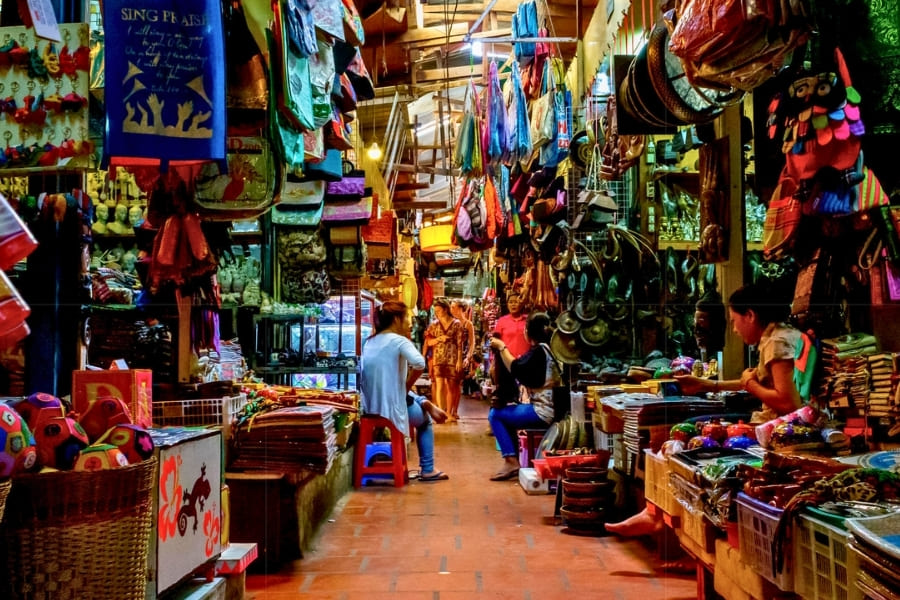
The stalls directly in the middle of the market cater to the one-stop-shop tourist. Prices start 30–50% higher than the perimeter stalls for the exact same elephant pants, fridge magnets, and keyrings. Same goods. Different geography. Walk ten minutes to the perimeter.
Midday "Fresh" Seafood
Before 8am, the internal wet market is functional and fine. After noon, the heat inside that building is significant and the food safety trajectory is not in your favour. Arrive early. The good stock is gone by 9am anyway.
Branded Electronics & Accessories
Replicas. All of them. That is not a moral position — it is a quality warning. The stitching fails, the screens crack, the zips break. If you know you're buying a replica and you're fine with that, proceed. If you think you're getting the genuine article at a surprising discount, you are not.
Finding Your Way Back
In 2026, the biggest frustration isn't finding the market — it's finding that specific tailor or surplus stall you saw on TikTok or bookmarked in a guide. The market has no digital map, no app, and no signage that means anything to a first-timer.
Every pillar in the market has a painted stall number (e.g., "Stall 412"). When you find a vendor you want to return to — a tailor, a surplus stall, a cobbler — photograph the stall number and the vendor's face before you leave. This is the only reliable navigation system the market has, and it works every time.
Secure your gear.
Phnom Penh still has a petty street crime problem around high-traffic tourist hubs. Keep your phone and bag on the inside — away from the street — when walking the perimeter. Do not use your phone while sitting in an open-air tuk-tuk directly outside the market. This isn't paranoia. It's the same advice every long-term resident gives every newcomer. Take it.
The Evening Shift
The market guide most people read ends at noon. This one doesn't. Once the internal market shutters around 5pm, Streets 155 and 440 transform into something the daytime version can't offer: a walk-by buffet, a fruit shake wall, and the neighbourhood's actual social life.
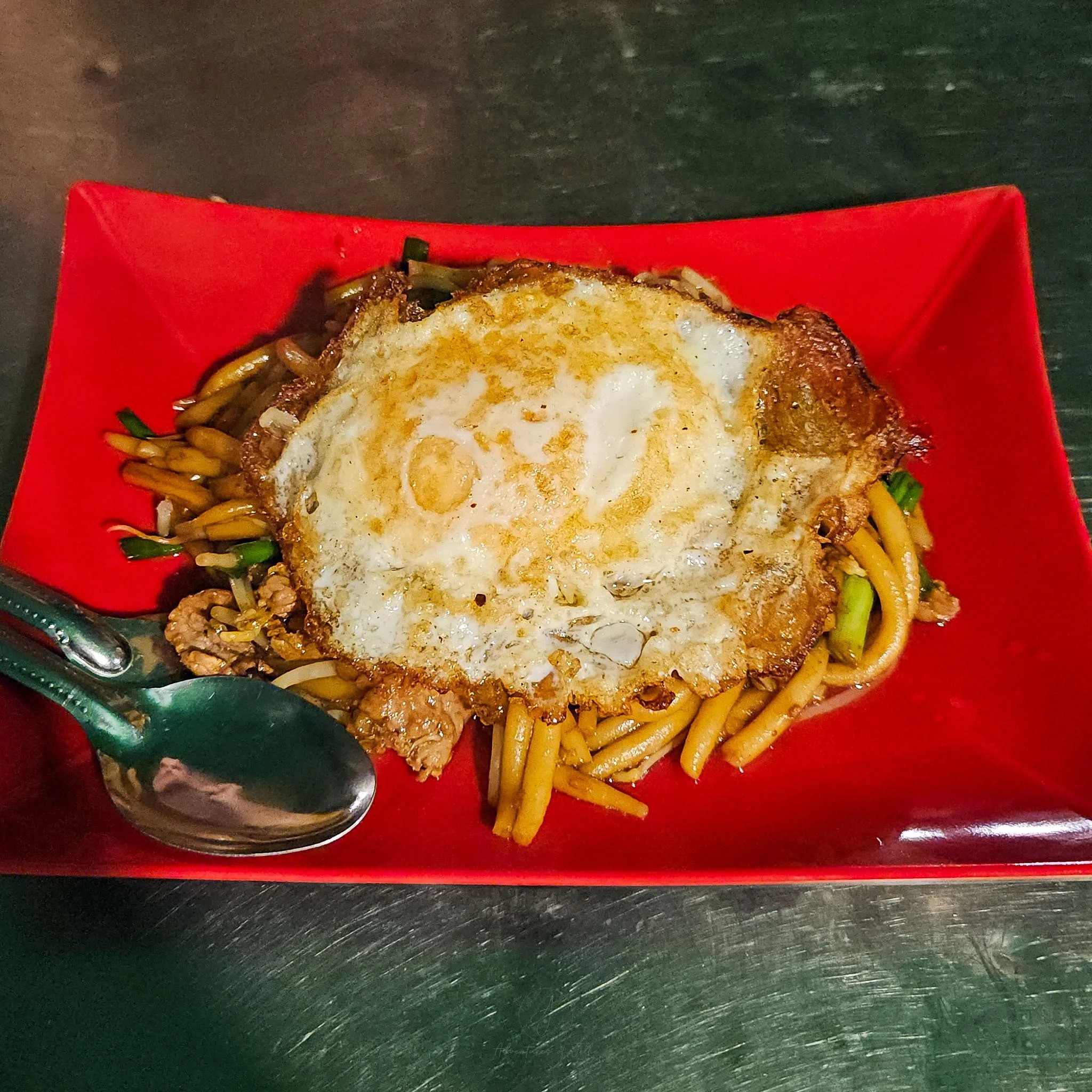
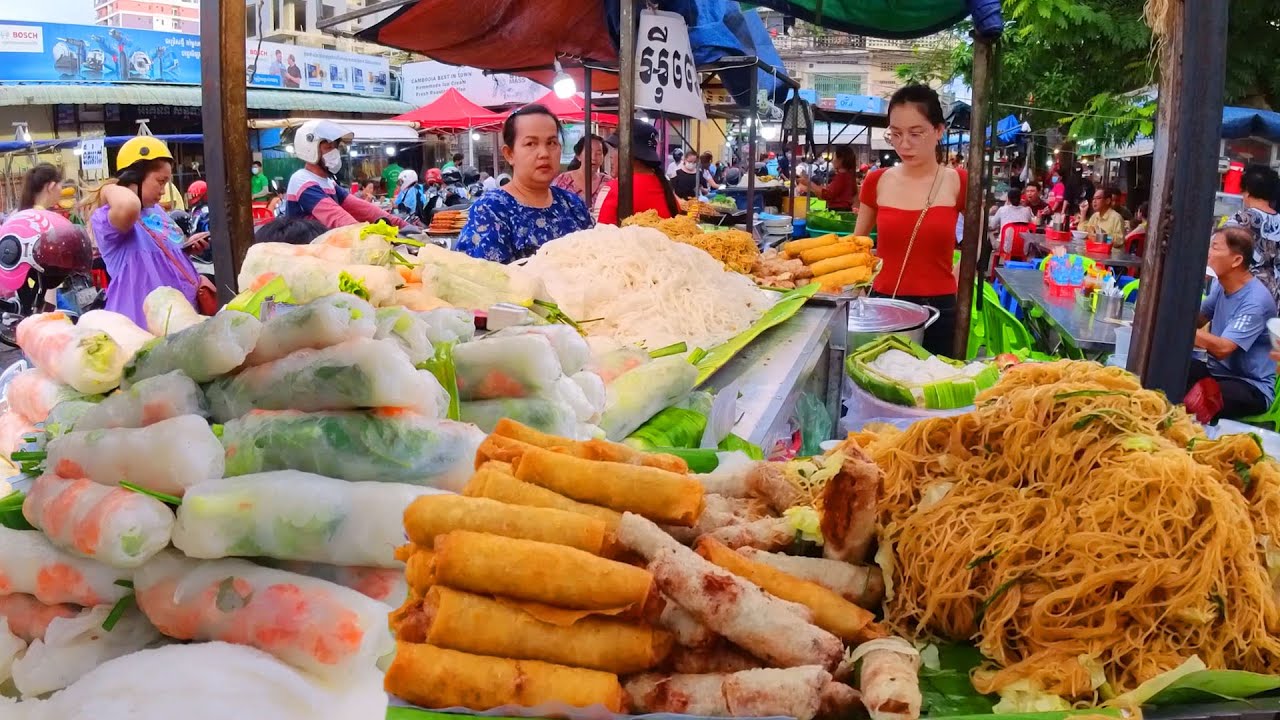
The parking space on the west side is replaced by dozens of stalls with plastic chairs and evening smoke. Grilled skewers, Lort Cha (short stir-fry noodles in massive iron woks), and the kind of ambient noise that makes a neighbourhood feel alive. In rainy season, everything gets covered with improvised tarps — whether you stay dry is genuinely uncertain and part of the experience.